Reviews 02-09-2002

Music Reviews 


Blood is Shining

by Eastern Dub Tactik

Visit Waveform records website

Let me begin first by stating that I'm not overly fond of vocal stylings in ambient music. Oh sure, there are some Tibetan or Gregorian chants that are quite compelling, but for the most part, give me my music straight and instrumental.

With that out of the way, let me say that despite the vocal additions to some of the tracks on Eastern Dub Tactik's first album, the music can be quite listenable.

The title is homage paid to cultural heroes and martyrs, whose blood is still "shining" as a guiding light to the rest of us. What makes this some what odd is that names that appear on the liner include Abraham Lincoln, John F. Kennedy, Malcolm X and the Kent State Four, a decidely American collection of names, but the music on the album is most definitely tinged with a Middle-Eastern flavor.

The album begins with "Spiritual High," a mix of heavy bass lines and throbbing drums, combined with an insistent organ run and what sounds like a combination of chanting and murmuring. "Day of Despair" is easily recognizable by anyone listening to the popular ambient music programs, most specifically Musical Starstreams. Not surprising, since Waveform is the "house label" of Musical Starstreams. The title track comes third, and the token chanting of the title is only occasional. Interspersed with some tools of the hip-hop trade, such as whistles and scratches, there are flutish sounds laid over a hard drum and bass bottom. "Spark the Sound" begins with a sitar-and-strings flourish, then transmogrifies into a pulsating, gyrating cacophony that is both intense and trancelike at the same time. It's one of the best tracks on the CD.

Make no mistake, this is a heavy drum-n-bass work; every one of the eleven tracks that make up this nearly one-hour collection has a driving, almost hypnotic beat backing it. The pieces vary by vocalist, and each cut is a work unto itself. The similarities are in the trance-like render- ing of each. "Like This" might be my personal favorite -- the vocals are minimal, and the music is tinted with electric organ and the familiar trance-like beat. 

However you slice it, the tracks each stand on their own, as distinct pieces of music. Together, they make up an entire album of powerful, if not almost disturbing flavor. If your taste runs to trance/chant music with a Middle-Eastern flair, this album might have your blood shining.

Reviewed by Fred Puhan for Ambient Visions


The Significance of Secrecy

by True Colour of Blood

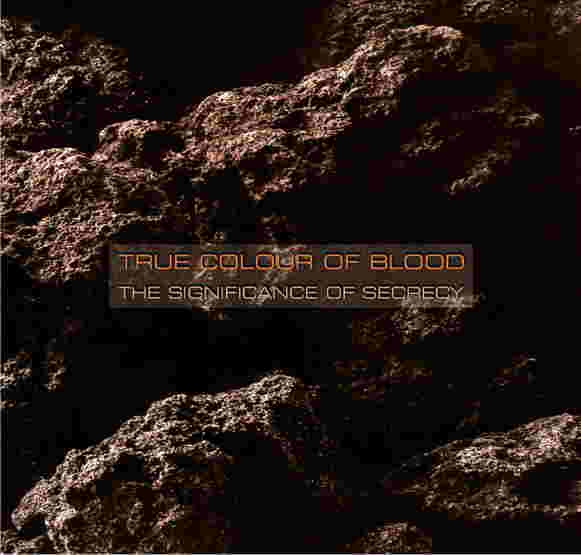
This ambient effort from Washington DC's True Colour Of Blood starts off on a rather minimal level. Slowly the tide drifts into the ever so quiet foreground. Sounds from the great distant streak across the field, only to fade out as quickly as they came into view. Out of nowhere the unidentified streak across the sky, slowly at first, but only for a moment, and then vanishing into nothing more than a droney landscape. Oscillating and vibrating tones pulsate to encapsulate attention. The heaviness of the rumbling bass  becomes highlighted by the darkness all around. A beat kicks in with track three, Forlorn. The beat disrupts the droney landscape, bringing forth a different direction. The beat seems to vere off into a mellow, free floating melody, drifting endlessly beyond the dormant heavens and above.

One of the more interesting things in regards to the works of TCOB is the use of instruments. There is not a synthesizer to be found on this album, however listening to the music it is almost hard to believe that only a guitar and drum machine, and a few other added effects are present. At times however the music can become rather predictable, and too short on anything really going on musically. The drifting becomes aimless, without bolstering much emotion. However that may be the aim of this artist. There also seems to be a lack of time. It becomes a solemn slope of drones freely drifting into worlds of dusk's darkness. Overall some people might find the minimalism to be too drawn out, and too shallow. However many listeners will be more inclined to praise such a slow and minimal release, with its rather chilled out experience and drawn out attitude, and maybe rightfully so. Finally, this album is probably best enjoyed with a good pair of headphones.

Reviewed by Jack the Tab for Ambient Visions


Planetarium

by Pete Namlook

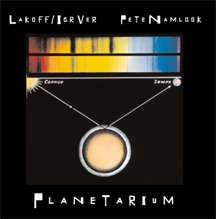
Planetarium is a deep set of cosmic space music and experimental ambience from Pete Namlook, nee Peter Kuhlmann, and Lakoff/IgrVer, the collective new composers from St. Petersburg, Russia.

This is some dark stuff.  The experimental timbres give the disc a slight avant-garde feel.  Pete does not shy away from challenges nor is he afraid to take risks.

Some of the pieces have overt techno rhythms and others are overt minimalism.  Pete and the collective are comfortable in both styles.  And, wherever they go, there are plenty of large atmospheres to compliment the style.

Pete is a master sound designer and a top-notch arranger.  He prospers in collaborations - either with well known or lesser-known artists.

Reviewed by Jim Brenholts


Heart of the Rain

by Karen FitzGerald

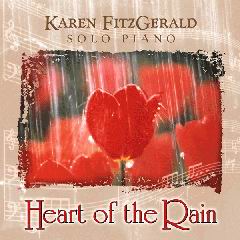
New age pianists are fairly easy to come by, but finding one with something special to say and a unique way of saying it is not so easy. Karen FitzGerald's debut album is a lovely surprise. Her melodies tend to be fairly simple, but are beautifully fleshed out, indicating her extensive classical roots. Karen cites George Winston and Liz Story as major influences on  her music, and while those influences are certainly there, the voice is Karen's alone. The music is intensely personal, but is also accessible and open. Fan of Winston's and Story's music should really enjoy "Heart of the Rain", as should fans of Wayne Gratz and Robin Spielberg.

All but two of the songs are solo piano, and the other two have washes of synth to add subtle color. "A Rainy Night Outside Your Door" is probably my favorite piece on the CD, with it's flowing rubato and poignant sadness - I also like the unpredictability of parts of the melody line. "Moods" is also exceptionally strong both musically and emotionally - it is thoughtful and introspective in the first few minutes, and then gets darker and deeper. Karen's elegant pianism  really comes through on this piece. "The Wind's Lament" is gorgeous, with a dark, pensive mood.

The three pieces I mentioned specifically are 7-10 1/2 minutes long, and have a spacious quality as well as the feeling that they had time to be fully explored and developed. The shorter pieces are also excellent (especially the touching "Lullaby" that closes the CD), but these longer works are exceptional. I highly recommend "Heart of the Rain"!

This Kathy Parsons review originally reviewed on the  Mainly Piano website. It is reprinted here on Ambient Visions with permission.


Landscape of a Dream

by Diatonis

It never ceases to amaze me how much great electronic instrumental music there is, and how one can always discover new music by an artist previously unknown to oneself. After hearing Cathedral Oceans by John Foxx a few years ago I have become more and more enamoured with ambient music. Thus having only recently discovered Diatonis (the name under which musician Stuart White records) I feel like a treasure hunter who has uncovered another new cache of treasure.

Landscape of a Dream contains four longish tracks of brilliant ambient music originally written by Stuart for his own use in helping relaxation. This is minimalist ambient at its best where relaxing tones change subtly over the course of a track without recourse to rhythm or melody. I suspect that to best appreciate all the nuances one would need to listen through headphones rather than speakers. Here is a perfect album for just lying back and letting your mind follow the sound in a kind of musical meditation as the formless sound textures drift around peacefully. I find this kind of music can instil a pleasant sense hypnosis.

Without hesitation I would compare Diatonis' music favourably with the likes of Exuviae, Vir Unis, and Michael Neil. He deserves to be more widely known than I think he is; I heartily recommend Landscape of a Dream to anyone who enjoys ambient, spacemusic,  and/or meditative music.

Reviewed by Dene Bebbington for Ambient Visions


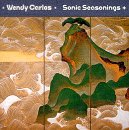
Sonic Seasonings

by Wendy Carlos

There are albums that become classics because they perfect an existing style, and then there are those rare recordings that quietly invent an entirely new way of listening. Wendy Carlos's Sonic Seasonings belongs firmly in the latter category. Released in 1972 after the enormous success of Switched-On Bach, Carlos surprised nearly everyone by turning away from electronic interpretations of classical music and instead creating four expansive soundscapes inspired by the changing seasons. At a time when neither "ambient music" nor "new age" had yet entered the musical vocabulary, she was already exploring ideas that countless artists would build upon in the decades that followed.

Structured as four side-long compositions representing Spring, Summer, Fall, and Winter, Sonic Seasonings draws inspiration from the seasonal concept made famous by Vivaldi, but its language is entirely its own. Carlos and producer Rachel Elkind blended carefully crafted Moog synthesizer textures with an extensive collection of field recordings, including birdsong, insects, wind, rain, and other natural sounds. Rather than using these recordings as decorative effects, they become equal partners with the electronics, creating immersive environments that feel organic instead of manufactured.

What remains remarkable more than fifty years later is how modern the album still sounds. The analog synthesizers possess a warmth that digital instruments often struggle to replicate, while Carlos's patient pacing allows every sound room to breathe. There is very little here that demands attention through melody or rhythm. Instead, the music unfolds gradually, inviting the listener to inhabit each sonic landscape rather than simply observe it. This sense of spaciousness would become one of the defining characteristics of ambient music long before the genre had a widely accepted name.

Carlos's technical achievements have understandably received enormous attention throughout her career, yet Sonic Seasonings demonstrates that her greatest gift may have been her sensitivity as a composer. Every transition between natural and synthesized sound feels deliberate, and every evolving texture contributes to the emotional character of the season it represents. Spring carries a sense of awakening, Summer radiates warmth and gentle abundance, Autumn introduces reflection and subtle melancholy, while Winter settles into an almost meditative stillness. These are emotional impressions rather than literal musical illustrations, allowing listeners to bring their own memories and experiences into the work.

Listening today, it is impossible not to recognize the album's influence. Environmental recordings, long-form synthesizer drones, slow harmonic development, and the seamless integration of natural sound have all become familiar elements within ambient, new age, and meditation music. In 1972, however, there were few precedents for such an approach. Carlos was charting unexplored territory with remarkable confidence, creating music intended not simply to entertain but to transform the atmosphere of the room and the state of mind of the listener.

The 1998 remastered CD edition adds Land of the Midnight Sun, a companion work recorded during the 1980s that extends many of the same ideas into new territory. While the original four seasonal movements remain the heart of the release, the additional material provides an intriguing glimpse into how Carlos continued refining her environmental aesthetic years later.

Even after all these years, Sonic Seasonings remains one of the great milestones in electronic music. It is not merely a historical curiosity or an early experiment. It is a timeless listening experience that still rewards quiet attention, reminding us that some of the most profound musical journeys unfold not through spectacle, but through patience, atmosphere, and the subtle beauty of sound itself.

Reviewed by Ambient Visions


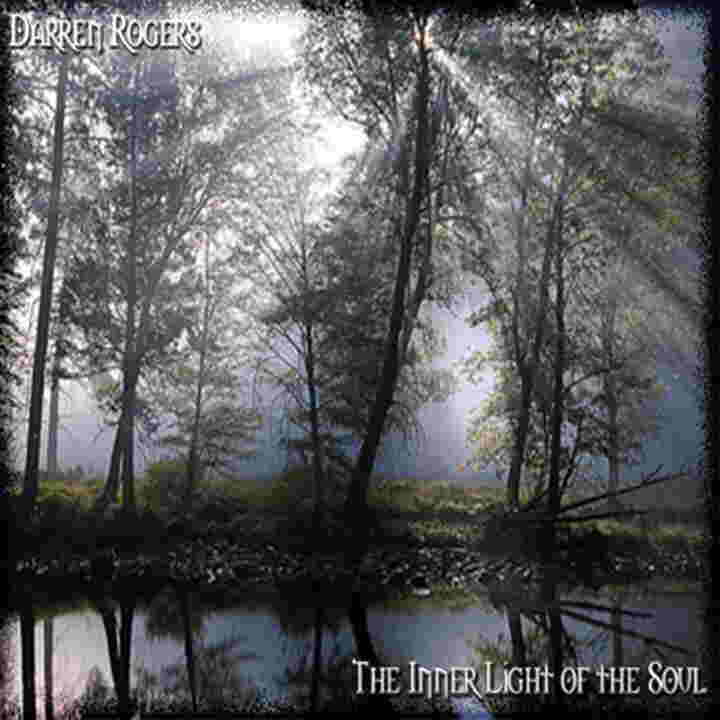
Inner Light of the Soul

by Darren Rogers

Inner Light of the Soul is a double CD set of stylish instrumentation from newcomer Darren Rogers.  He composed and created this large-scale soundscape on a Kurzweil 2000 synth.  He had assistance from Vance Sheaks (guitars and drum programming) and Katie Gerdes (vocals and voice samples).

This is an absolutely beautiful set!  Darren covers all bases from chorale synth to heavy sequences.  The pastoral splendor and smooth melodies belie the depth of this music.  Darren's synthesizer has absolute angelic appeal.  It is downright religious if not blatantly sacred!

Deep listeners will grab onto the hooks and riffs of this spiritual soundworld.  The only logical comparisons for this vast atmospheric work are the great classical chorales of Beethoven, Bach, Vivaldi and Handel.  this is not to imply that Darren is in that league.  It is merely to suggest that the emotional and spiritual responses are similar.

These surprising CD's are truly amazing.  The set is on Darren's Imagineer label.

Reviewed by Jim Brenholts